How to Get Your Business Recommended by AI (ChatGPT, Gemini, and Google AI)
A local-business playbook for getting named by ChatGPT, Gemini, and Google's AI: lock your data, build reviews and mentions, write quotable content, and check what AI already says.
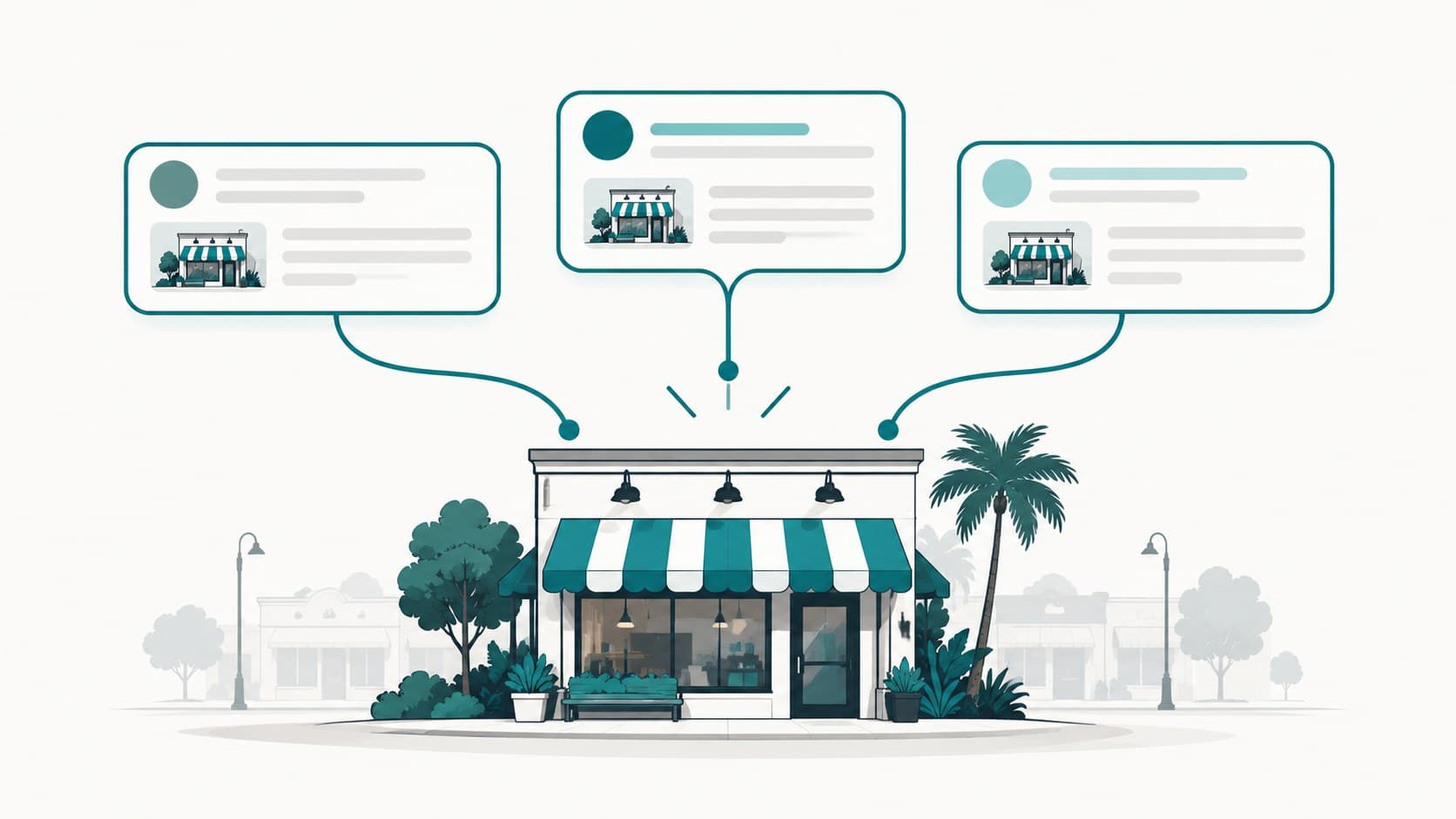
How do you get AI to recommend your business?
When someone asks ChatGPT, Gemini, or Google's AI for the best provider in their area, the AI builds its answer from the same trust signals that power local search: a complete and consistent business profile, recent reviews, and mentions on sites the AI already trusts. You get recommended by making your business easy to verify and easy to quote. Four moves do most of the work: lock your business data so it matches everywhere, build steady reviews and third-party mentions, write pages that answer real questions with sourced facts, and check what the AI already says about you so you can fix the gaps. Research shows the biggest visibility gains go to businesses that are not already at the top, which is the opening for a local company right now.
If you have typed "best HVAC company near me" into ChatGPT or watched Google answer a search before you could click anything, you have seen the shift. People are asking AI for recommendations, and the AI names a short list of businesses. This guide is the practical version: the specific things a local business can do to be on that list, with the reasoning and the sources behind each one.
How AI tools decide which businesses to recommend
AI tools do not have their own opinion of your business. They assemble an answer from what they can find and trust: your Google Business Profile, your reviews, your website, and third-party sites that mention you. The more consistent and credible those sources are, the more confident the AI is in naming you. This is why getting recommended by AI is not a separate trick from local SEO, it is the same foundation working harder.
The reward for getting this right is real. Ahrefs measured a 58% drop in clicks to the top organic result on informational searches where an AI Overview appears (a 300,000 keyword study comparing actual to forecast clicks over two years), so the old prize of ranking first is shrinking. Meanwhile Seer Interactive found that being named inside an AI Overview earned about 35% more organic clicks than not being cited on the same query. The traffic is moving to whoever the AI quotes.
Step 1: Lock down your business data everywhere
The first move is the least glamorous and the most important: make your business information identical everywhere it appears. Name, address, phone number, hours, and services should match across your Google Business Profile, your website, and every directory. When the AI finds the same facts in multiple places, it trusts them. When it finds conflicting hours or a wrong phone number, it hedges, and a hedge means it recommends someone else.
Start with a complete Google Business Profile, because it is the single richest source the AI reads for a local business. Google reports that a complete profile makes a business 2.7 times more likely to be considered reputable. Fill every field: the most specific accurate primary category, services, service area, hours, and a real description. A thin or inconsistent profile is the most common reason a good business is invisible to AI.
Step 2: Build the reviews and mentions AI reads
AI assembles your reputation from reviews and from what other sites say about you. Both matter, and recency matters more than most owners think. In Whitespark's 2026 local ranking research, review recency and sentiment now outweigh sheer review count, so a steady flow of fresh reviews beats a larger but stale pile. Aim for a handful of new reviews every month and respond to each one, which signals to both Google and the AI that the business is active and managed.
Third-party mentions are the other half. When a local "best of" list, a chamber directory, or a local news piece names your business, that is an independent source the AI can lean on. Getting onto two or three reputable local lists is a concrete project most of your competitors are not pursuing, and it feeds both traditional search and AI answers.
Step 3: Write content AI can quote
AI prefers to quote content that is clear, specific, and sourced. The strongest evidence for what works comes from a large academic study, and the findings are unusually actionable.
The Princeton and Georgia Tech GEO study (KDD 2024) tested these tactics across thousands of queries. The tactics that raised AI visibility were all credibility signals, not keyword tricks:
| Tactic | Effect on AI visibility |
|---|---|
| Cite credible sources | ~+40% |
| Add relevant statistics | ~+37% |
| Add quotations from authorities | ~+22% |
| Keyword stuffing | ~0% (slightly negative) |
Source: Aggarwal et al., "GEO: Generative Engine Optimization," KDD 2024. The practical read: pages that answer the real questions your customers ask, backed by specific numbers and named sources, are what the AI pulls from. Pages that just describe your services in general terms give it nothing to quote.
The same study found the biggest visibility gains went to pages that were not already ranking at the top. If you are a local business rather than a national brand, that is structurally in your favor. We go deeper on the mechanics in our guide to showing up in AI Overviews, and we build this into the same work as local SEO.
Step 4: Check what AI already says about you
Most owners have never actually asked. Open ChatGPT, Gemini, and Google and ask the questions a prospect would: "who is the best [your service] in [your city]," "recommend a [your trade] near [your area]." Note whether you appear, who does appear, and what the AI says about them. This is free competitive intelligence and a direct to-do list. If a competitor is named and you are not, look at what the AI cites for them: a review profile, a directory, a page that answers a question. That gap is your next task. Repeat the check monthly, because AI answers shift as the underlying sources change.
Why local businesses have the advantage right now
The honest reason to act now is that almost none of your local competitors are set up for this yet. The national brands optimize for national queries. The research shows the smaller, non-dominant player gets the larger lift from these tactics. And the work is not exotic: a complete profile, consistent data, fresh reviews, a few credible mentions, and content that answers real questions with real numbers. That is a foundation a local business can build in a quarter, and once it is built it keeps working while competitors are still wondering why the AI never names them.
This is the same foundation we build into our GEO optimization work, folded in with local SEO rather than sold as a separate bolt-on. If you want the full picture of the fundamentals underneath it, start with our local SEO guide.
See if AI recommends your business
We will check whether ChatGPT, Gemini, and Google's AI name your business when a local prospect asks, show you who they recommend instead, and map the fastest path to being the answer. See our GEO optimization or book a free audit.
Frequently asked questions
Enjoying this content? Add us to your Google Preferred Sources to see our articles first.